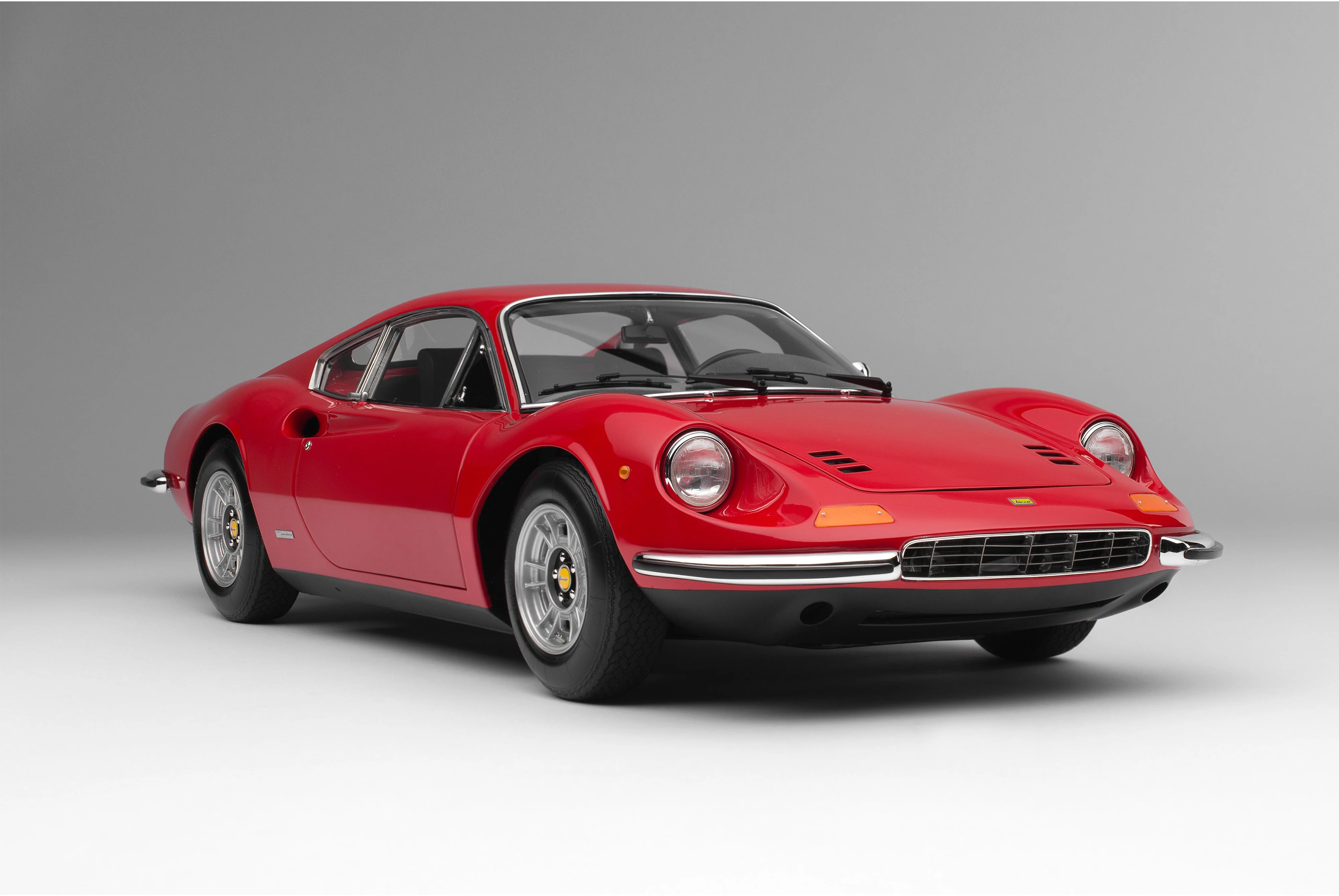
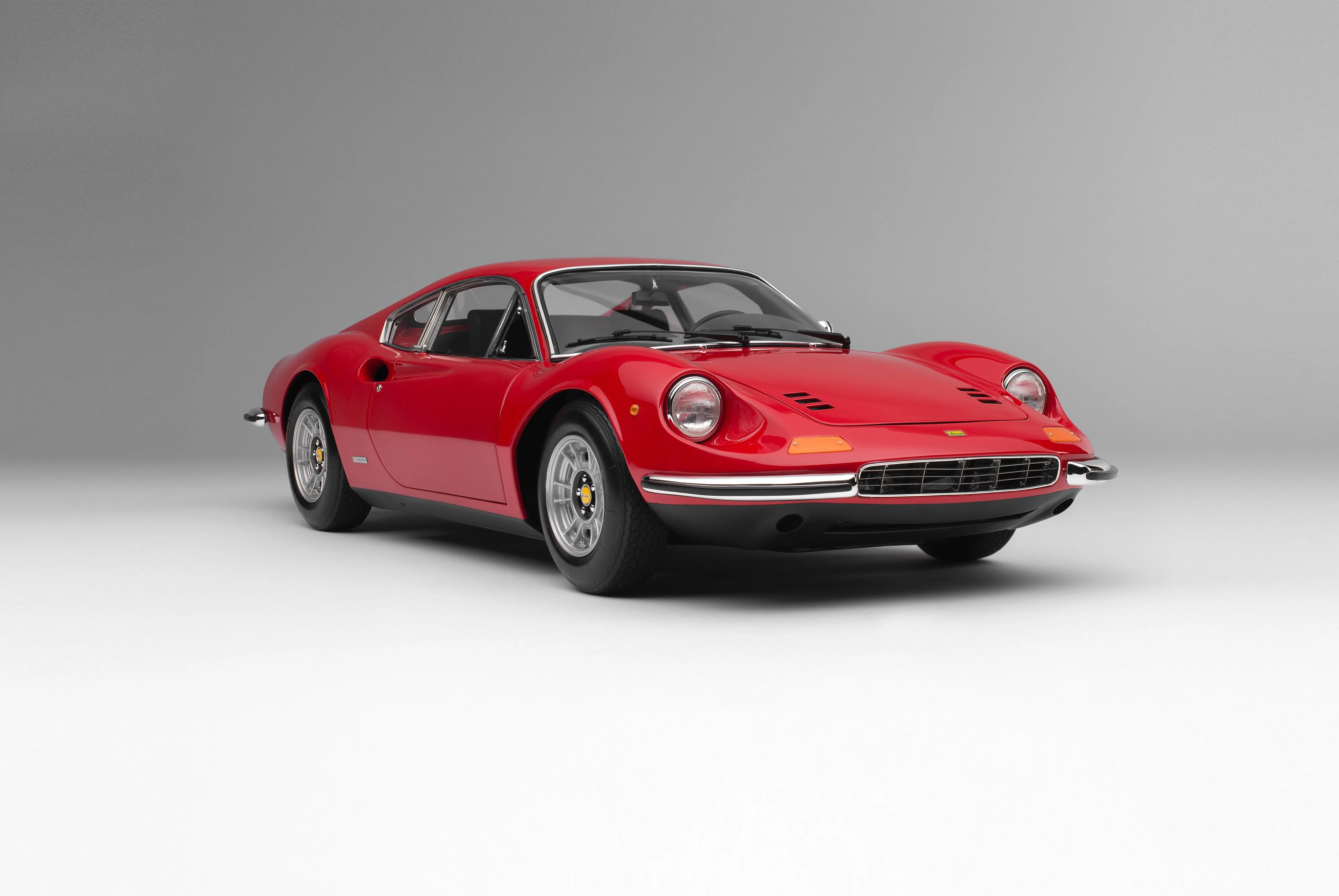
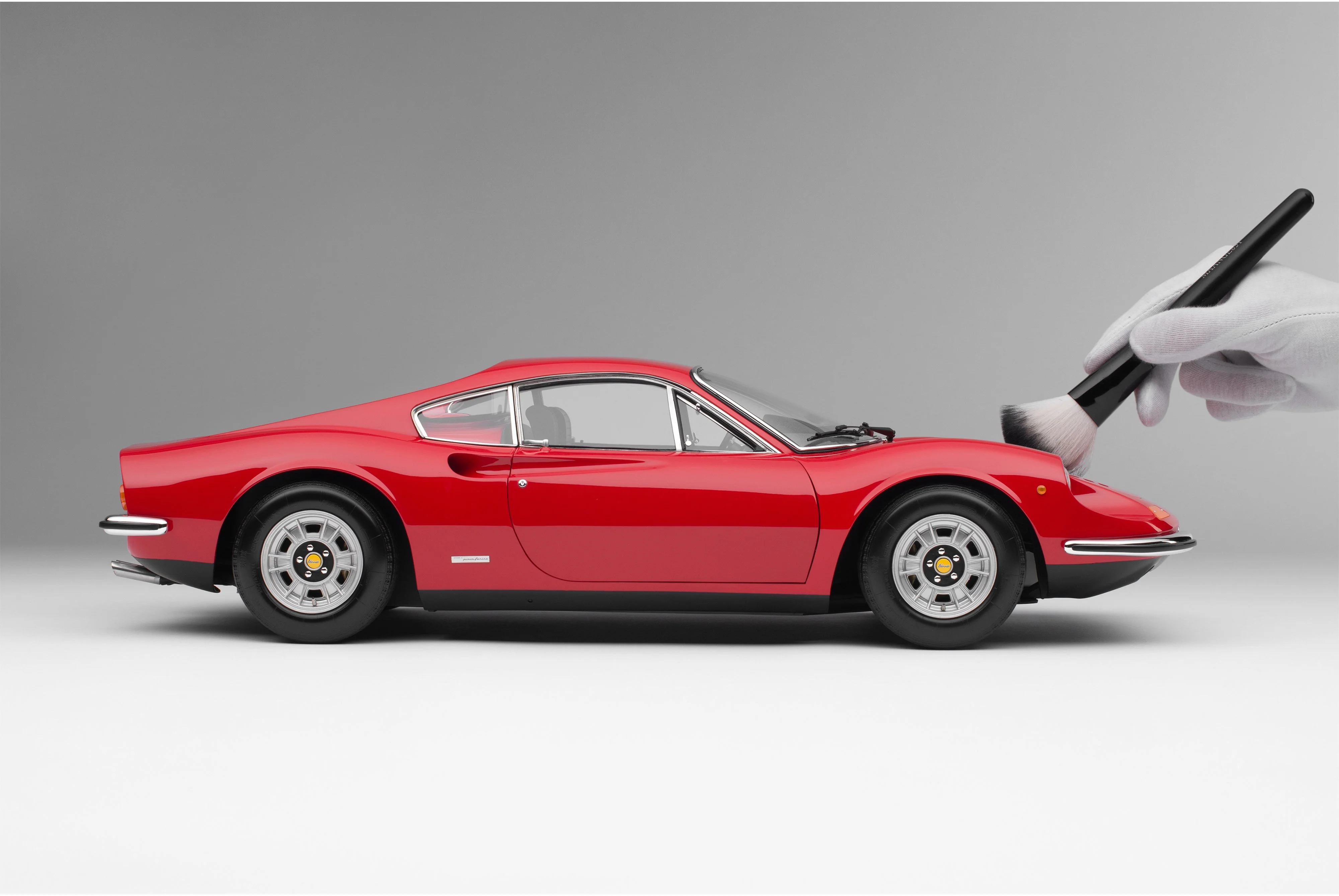
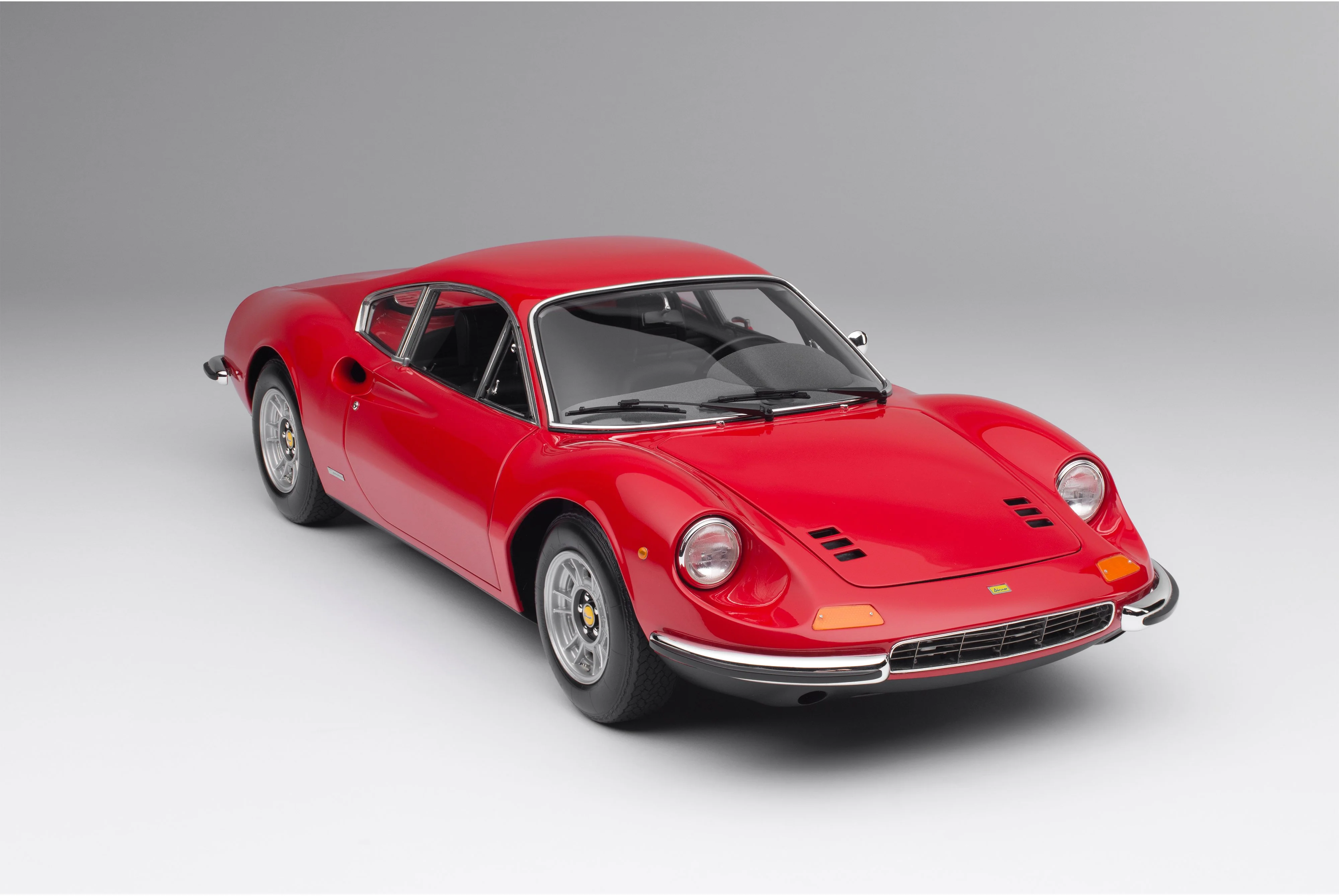
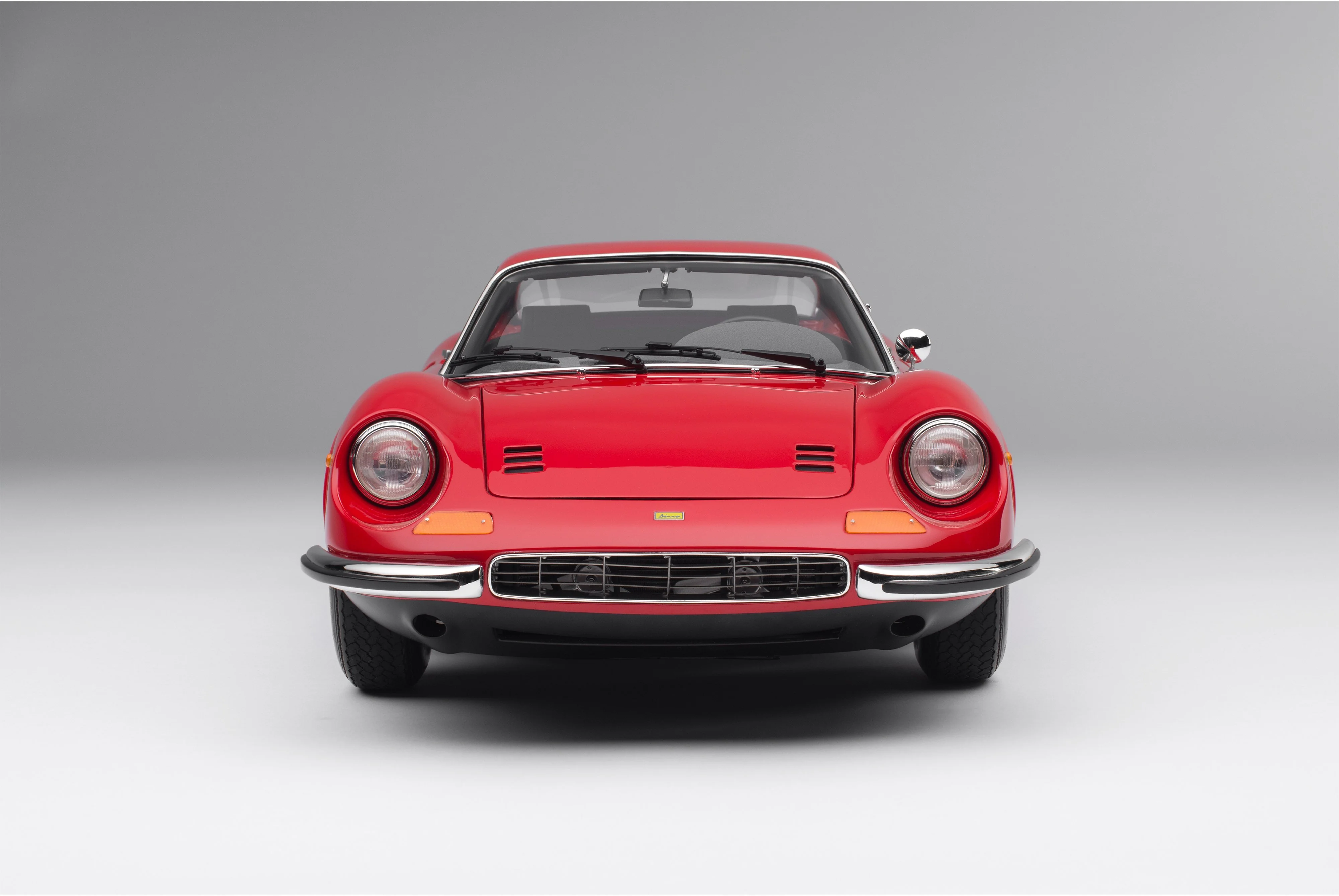



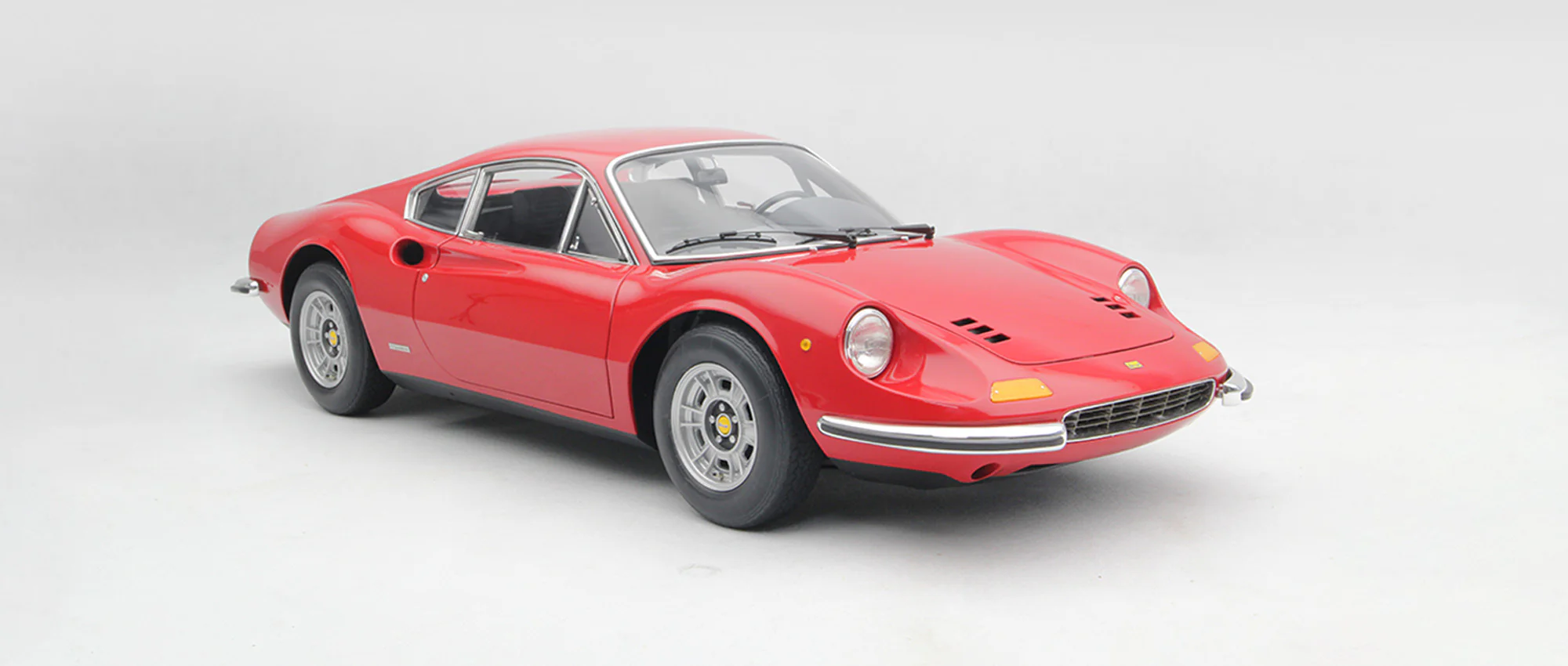
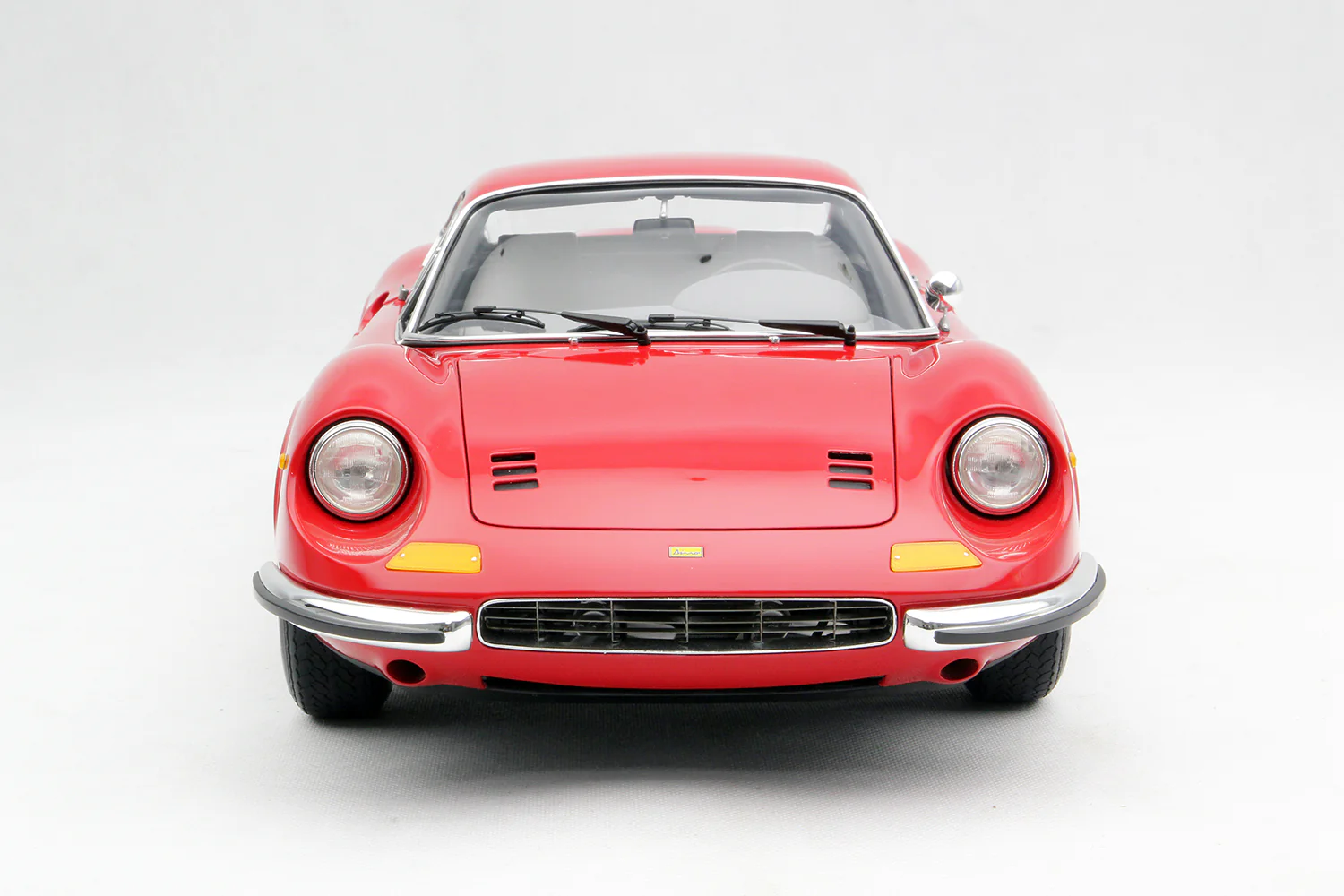
Ferrari Dino 246 GT (1969)
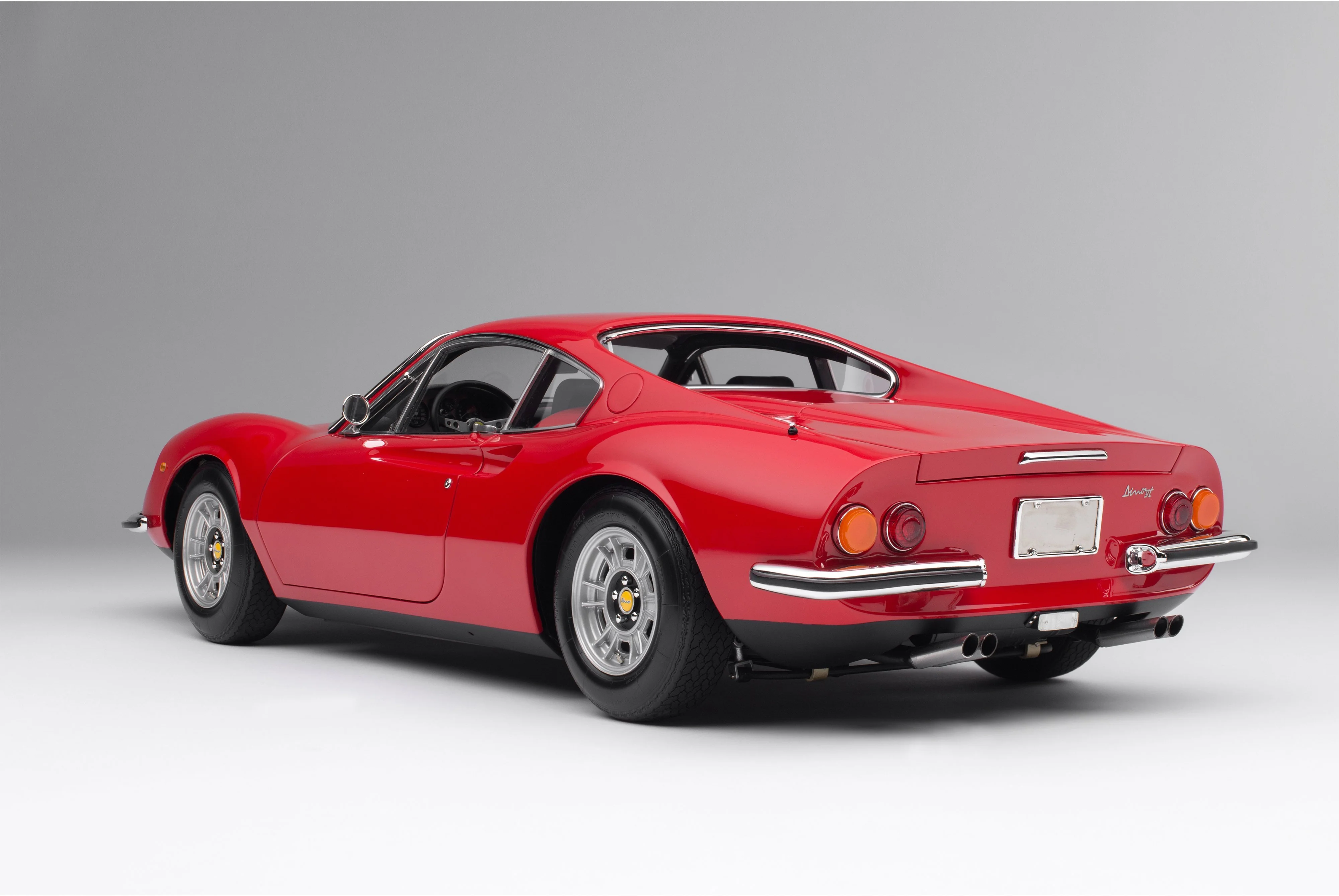
Considered to be one of the most beautiful road-going Ferraris ever created, the Dino 246 GT was the more powerful successor to the 206 GT. It was a delight from all angles and its combination of beauty, handling, V6 engine note, mid-engined layout, unusually good all-round visibility and comparative affordability made it irresistible. Enzo envisaged the Dino to be a rival to Porsche’s new 911 and it was a real statement from the Italian marque in terms of concept and design, after only building front-engined V12 sports cars previously.
The original Dino 206 GT was introduced in 1967 with a two litre V6 engine, before being replaced in 1969 with a more powerful version bearing a 2.4 litre V6 in the Dino 246. With 195 hp, the 246 was sprightly and its rear mid-engine configuration provided it with light steering and terrific balance. Visually the 246 GT was almost identical to the 206 GT that it succeeded, though the engine block material was changed from aluminium to cast iron and the wheelbase was extended by 60mm. By 1972, with the sales of the Dino 246 GT stable, Ferrari looked to increase its popularity still further by introducing an open version. The styling retained the individual, attractive lines of the 264 GT, with the added advantage of a practical targa top for open-air driving.
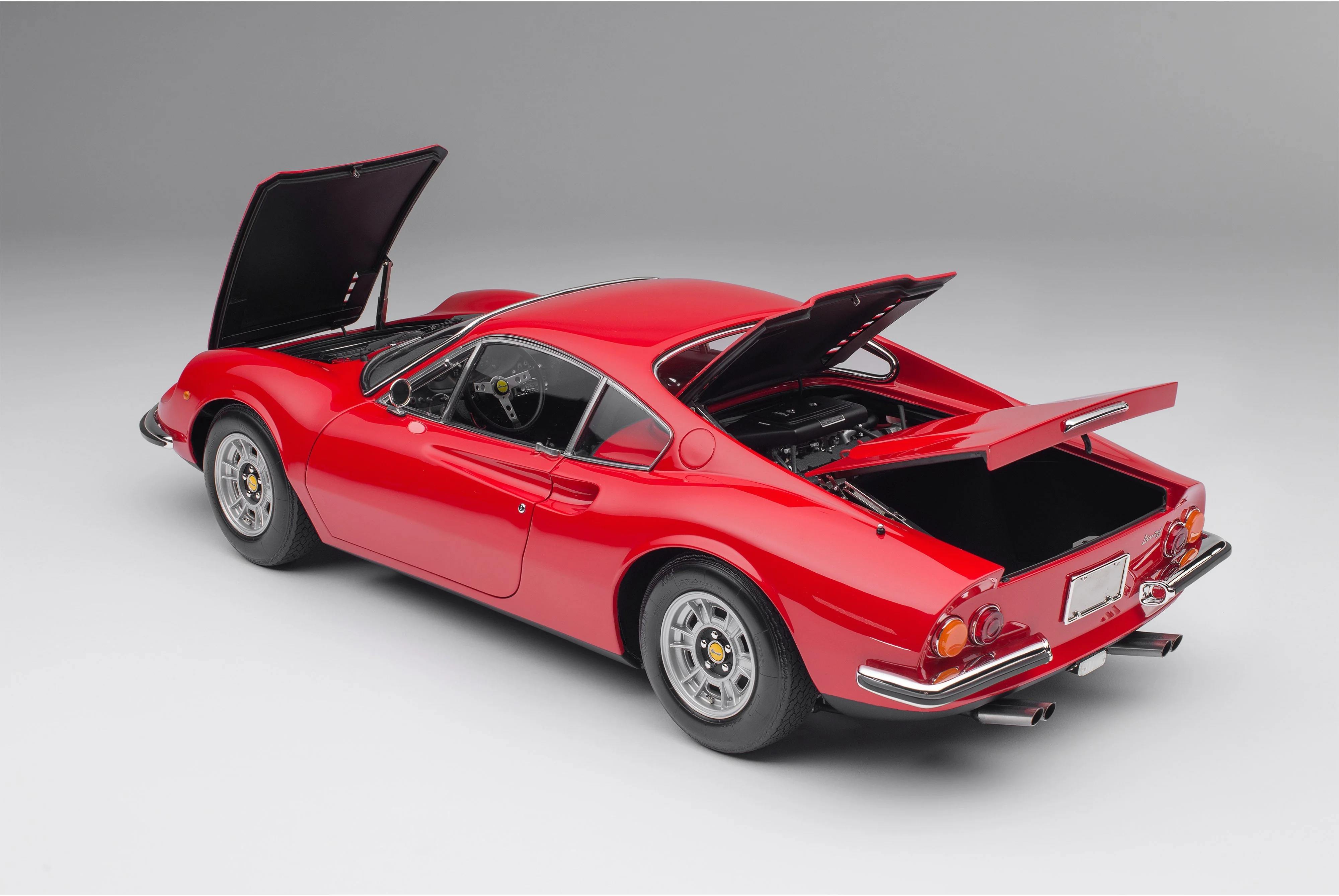
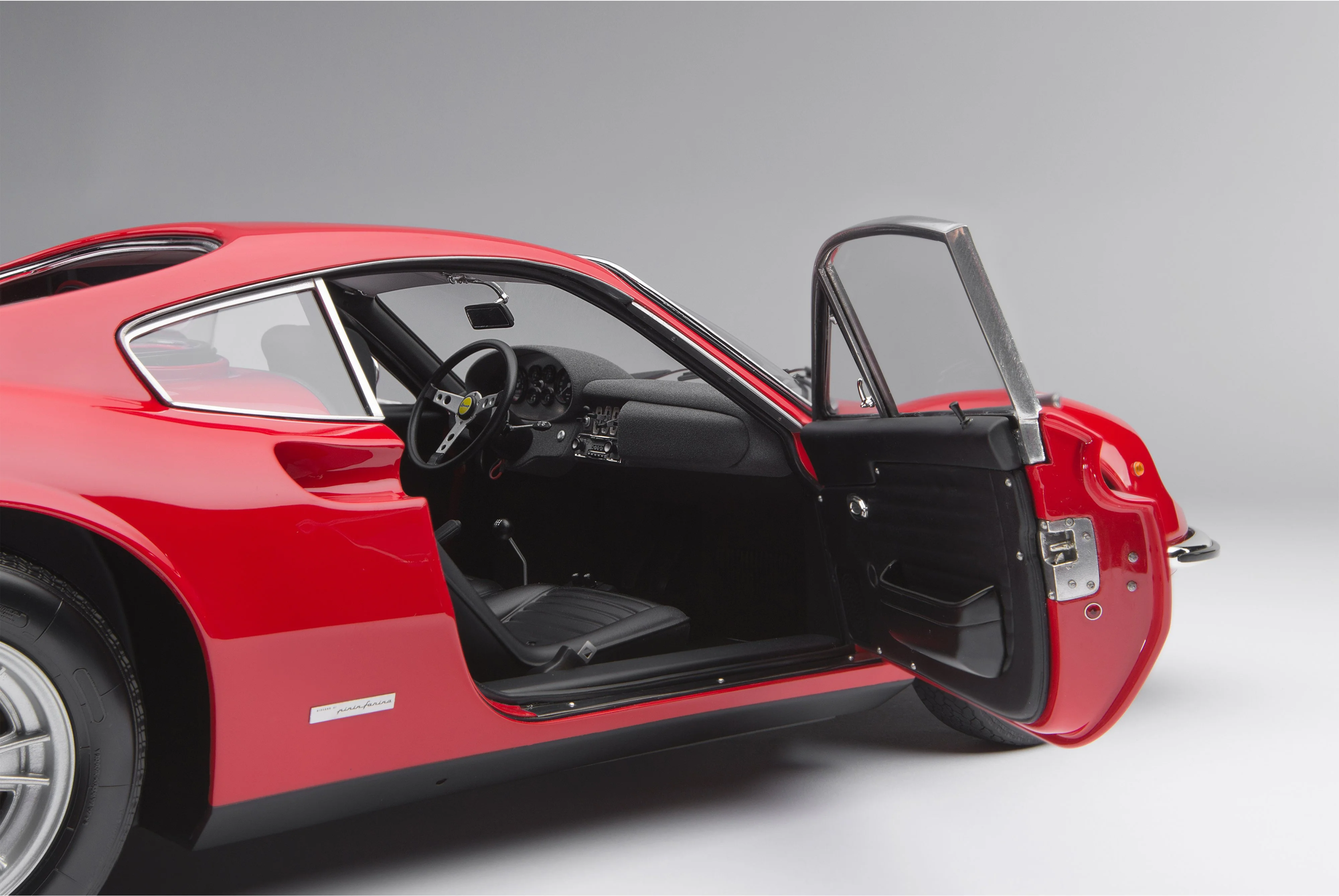
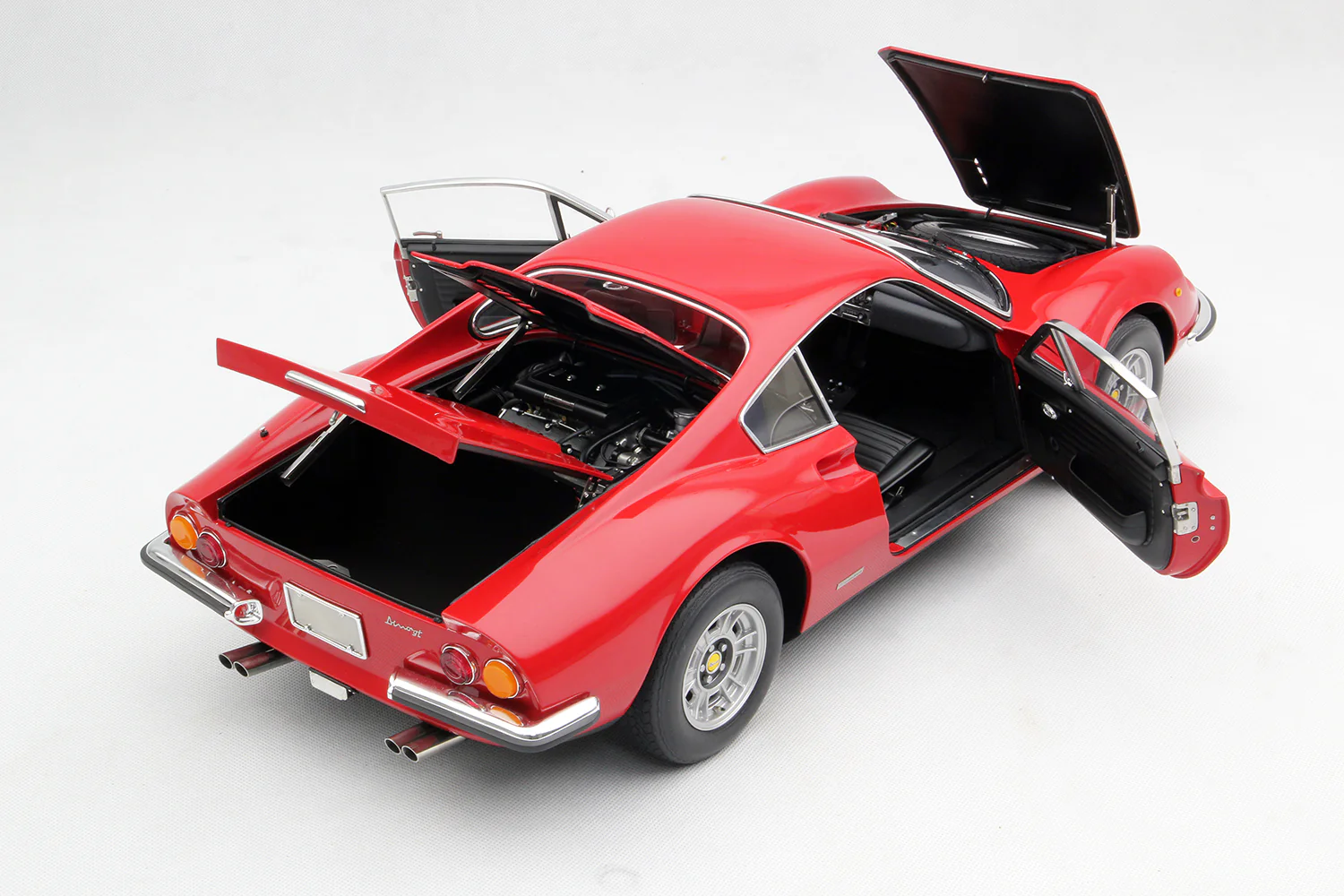
The voluptuous bodywork of the Dino was designed by Pininfarina and built by Scaglietti and covered a tubular chassis which carried wishbone independent suspension at each corner. The engine, with four overhead camshafts, was mounted transversely behind the driver and in front of the rear axle. Power to the wheels was transmitted via drop gears to the transverse 5-speed gearbox, in unit with the differential and engine sump. With rack and pinion steering and a mid-engined configuration, it was a revelation in terms of road holding and stability, nothing had been made like this before and it left its larger V12-engined siblings in its wake.
The Dino has the distinction of being one of the few Ferraris not to carry a Prancing Horse badge: the sub-brand was created to offer relatively low-cost sports car with engines smaller than 12 cylinders. It was named in honour of Enzo’s late son Alfredo ‘Dino’ Ferrari, who was credited with design for the original V6 engine used in the Formula 2 cars. Alfredino’s signature forms the basis of the Dino badge. More than 3,700 were produced in both GT berlinetta and GTS spider configurations, a testament to its widespread appeal.
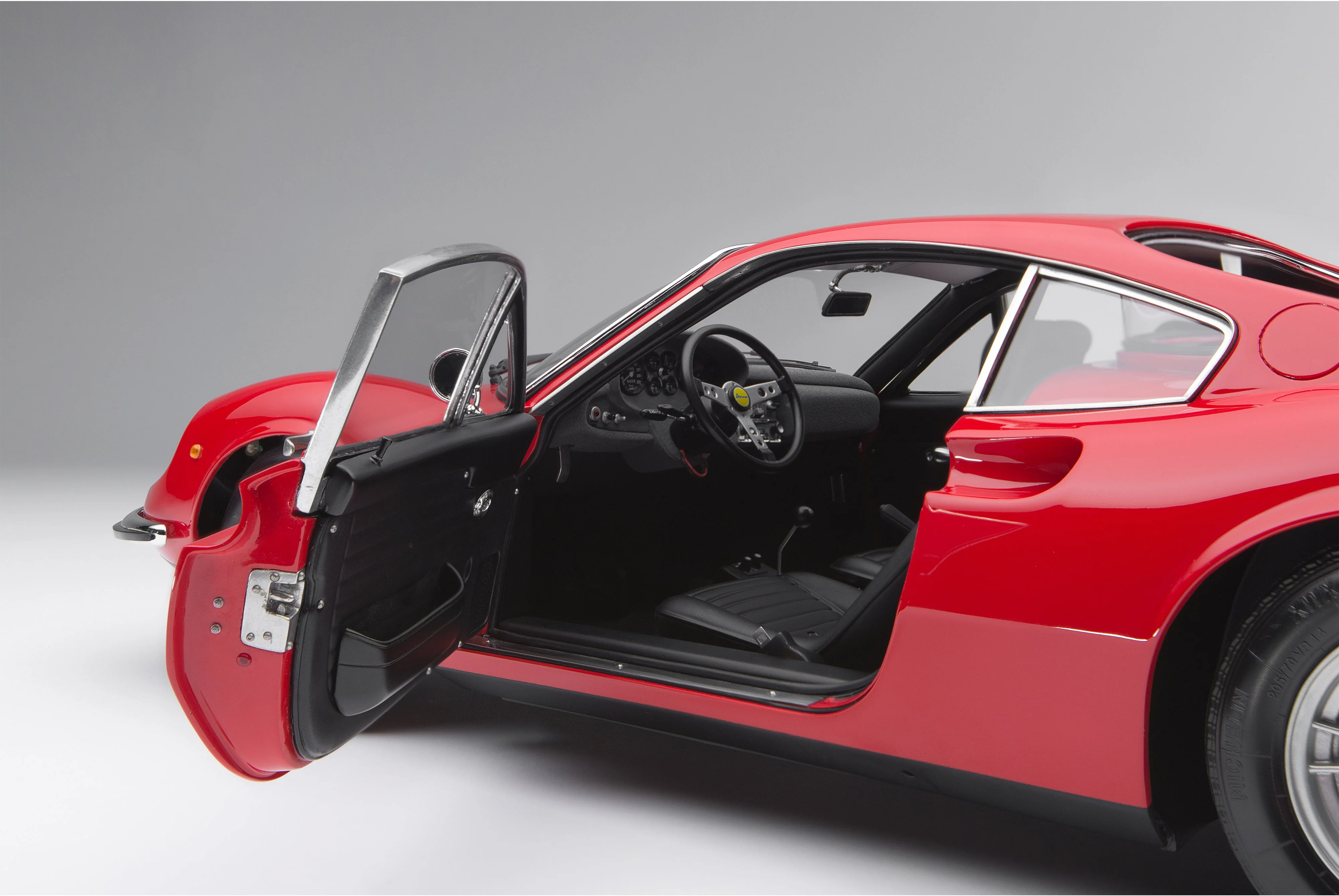
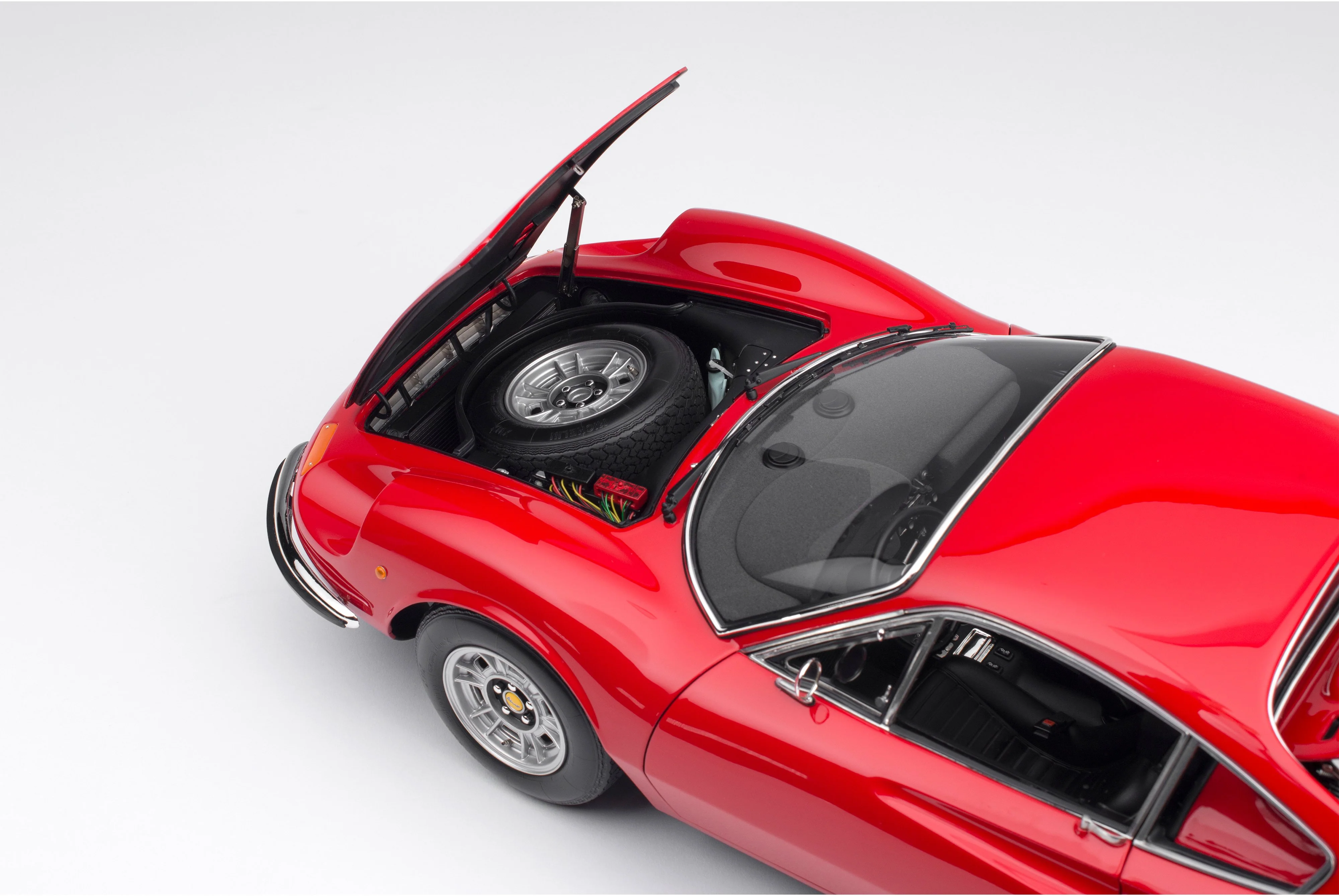
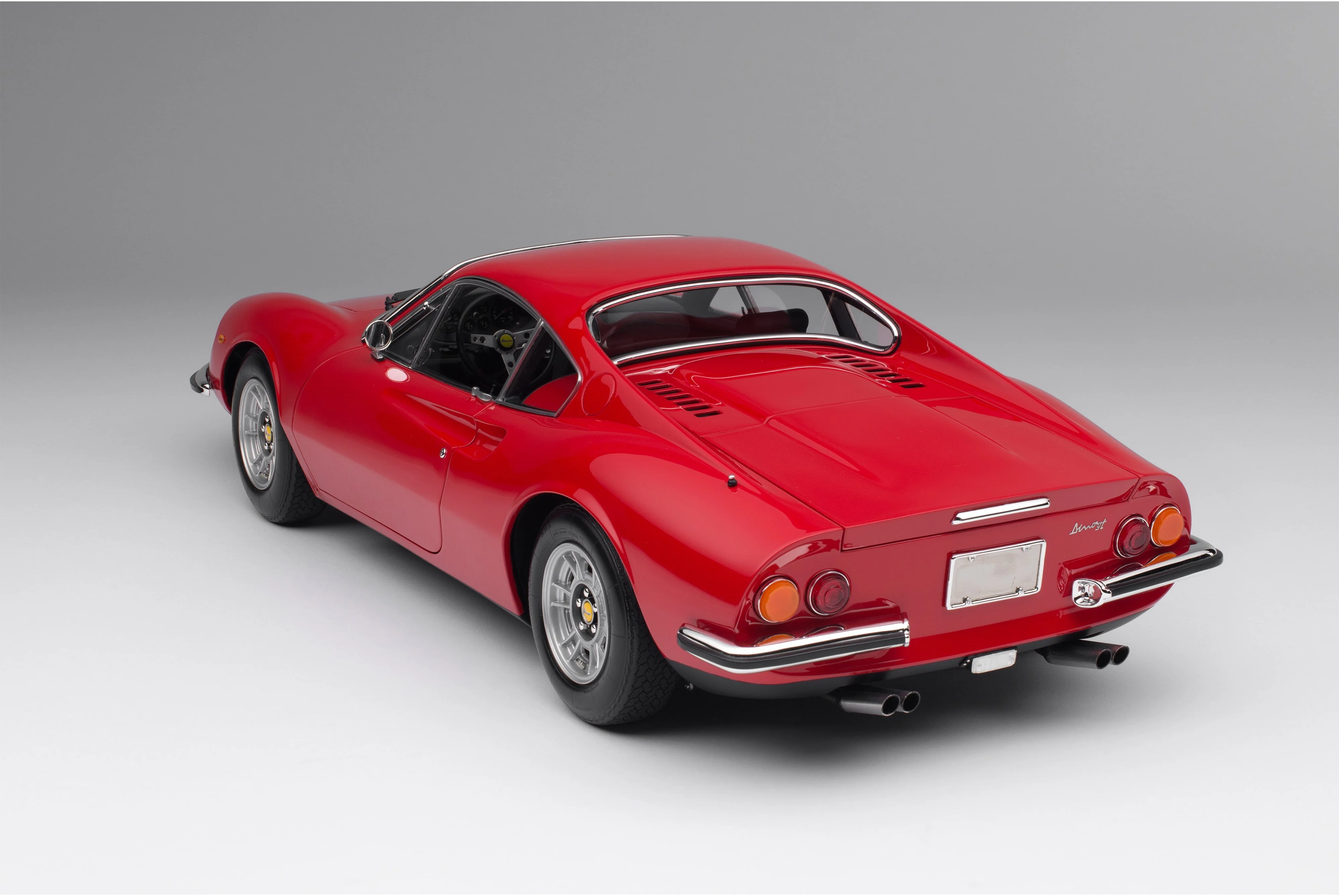
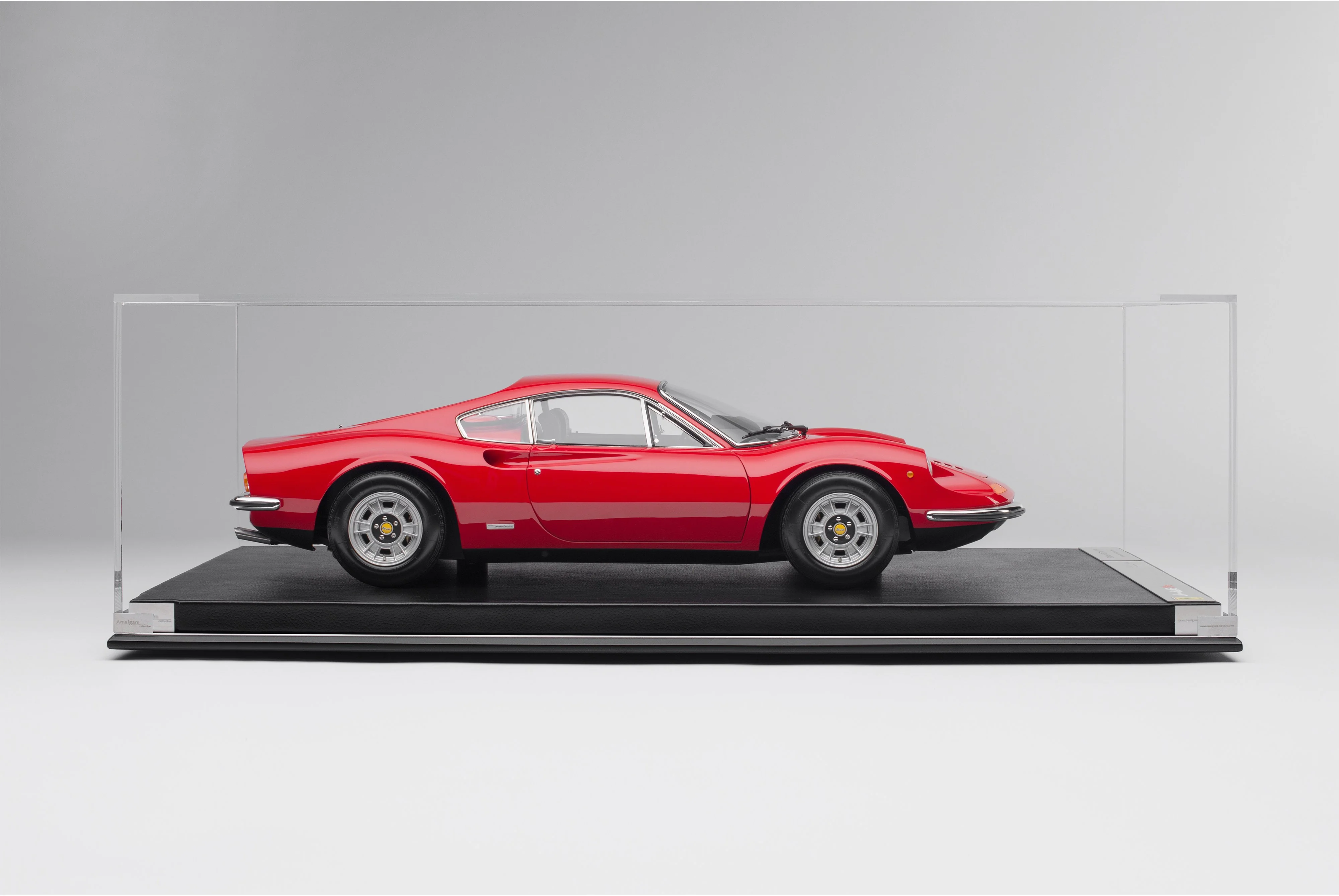
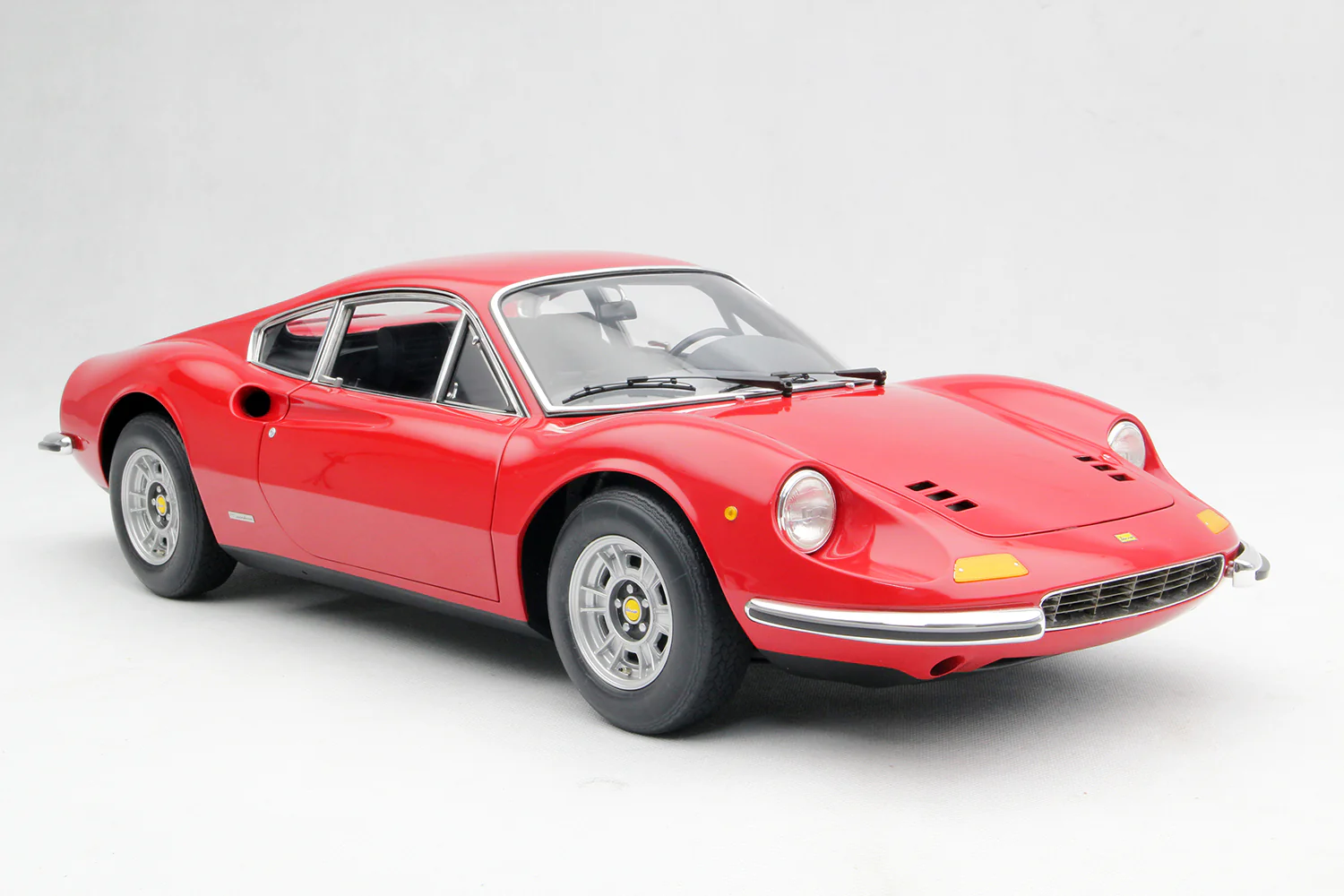
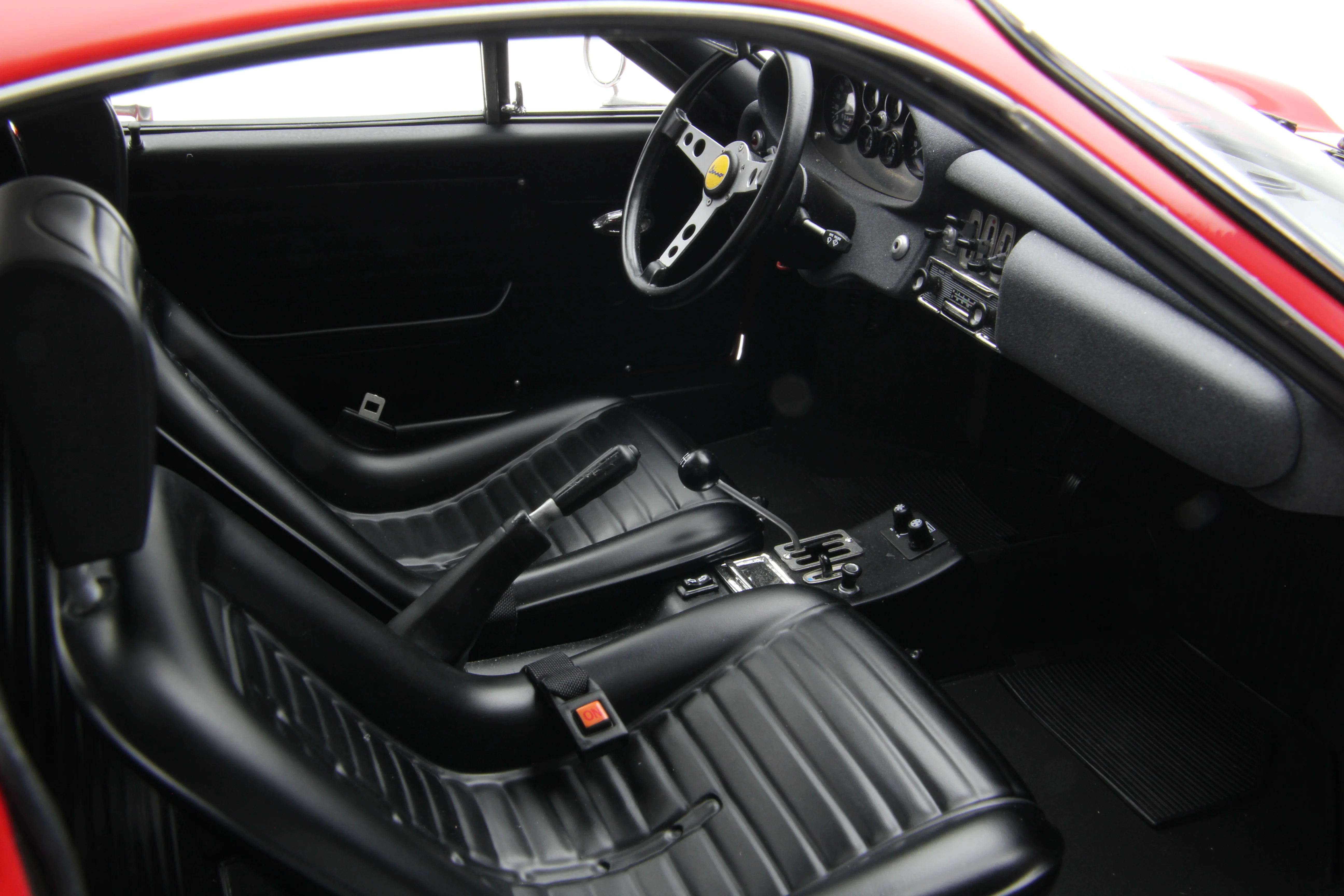
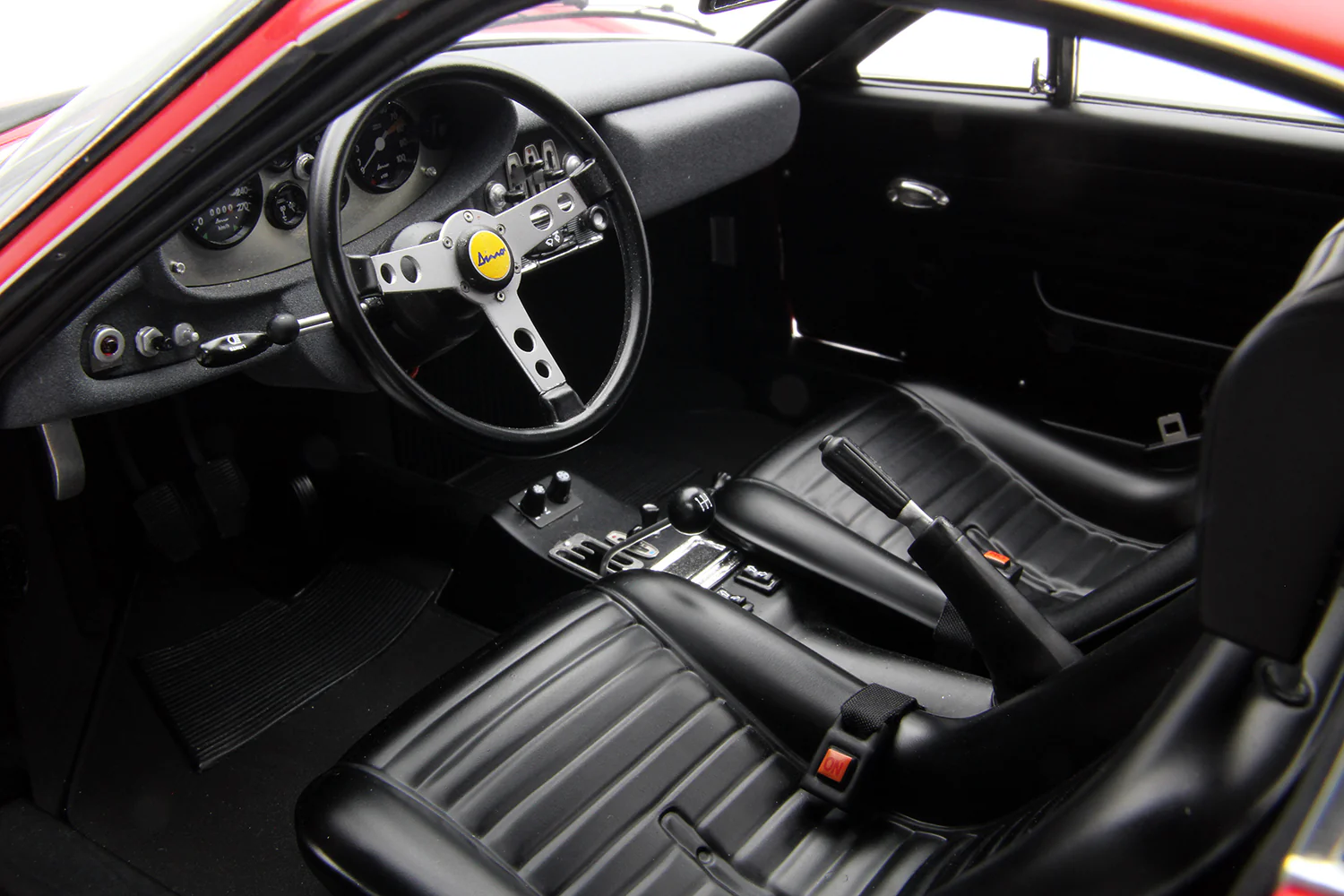
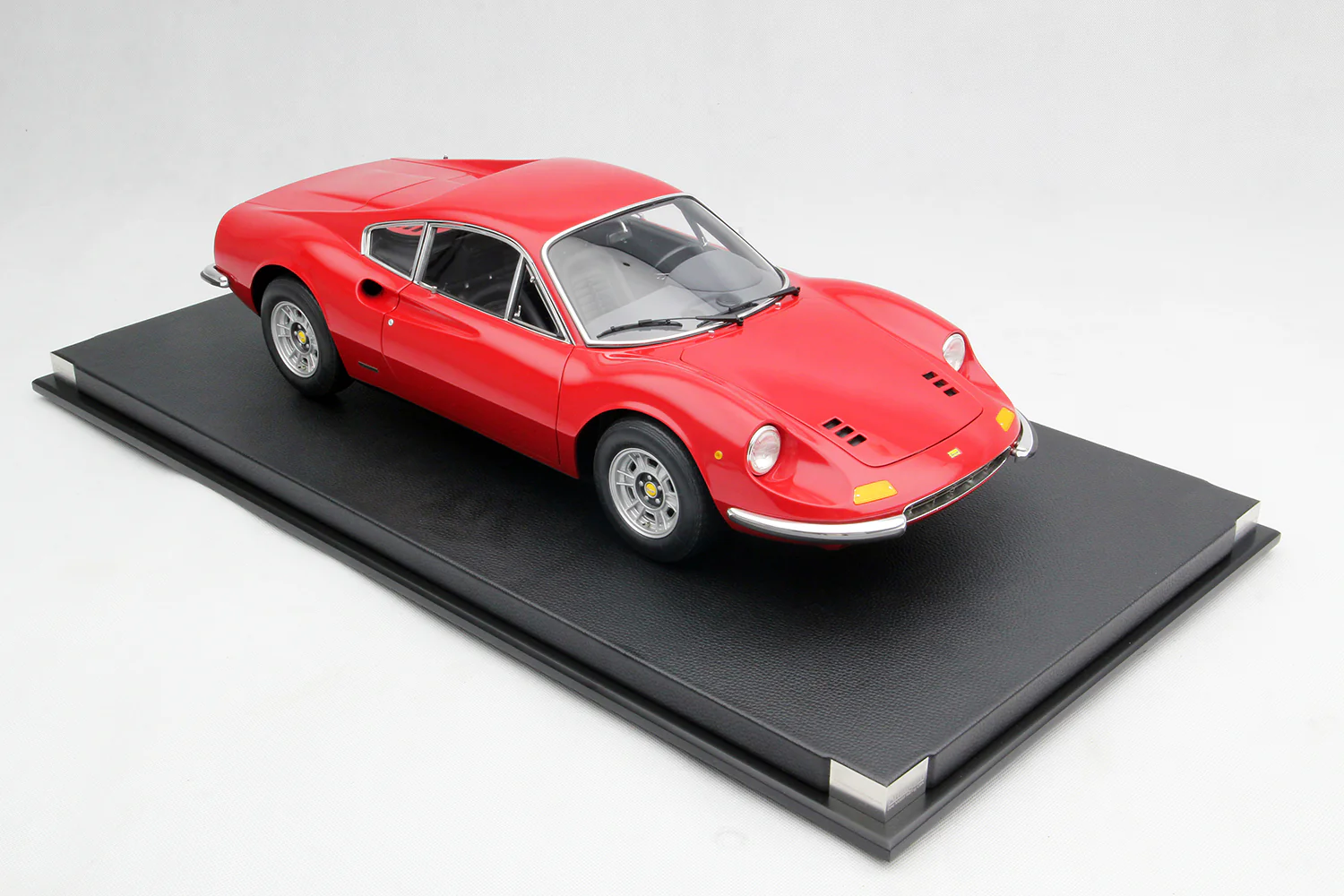
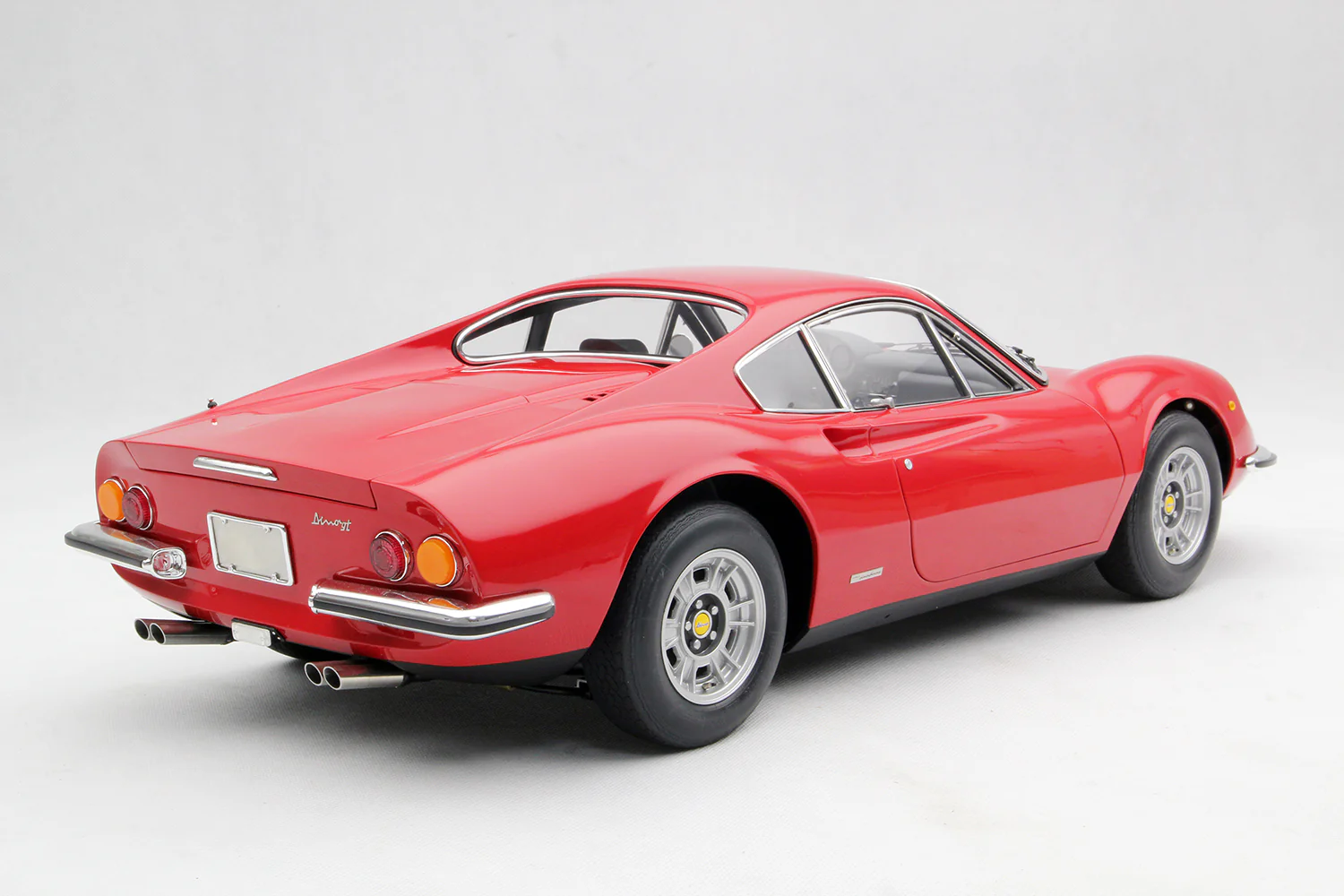
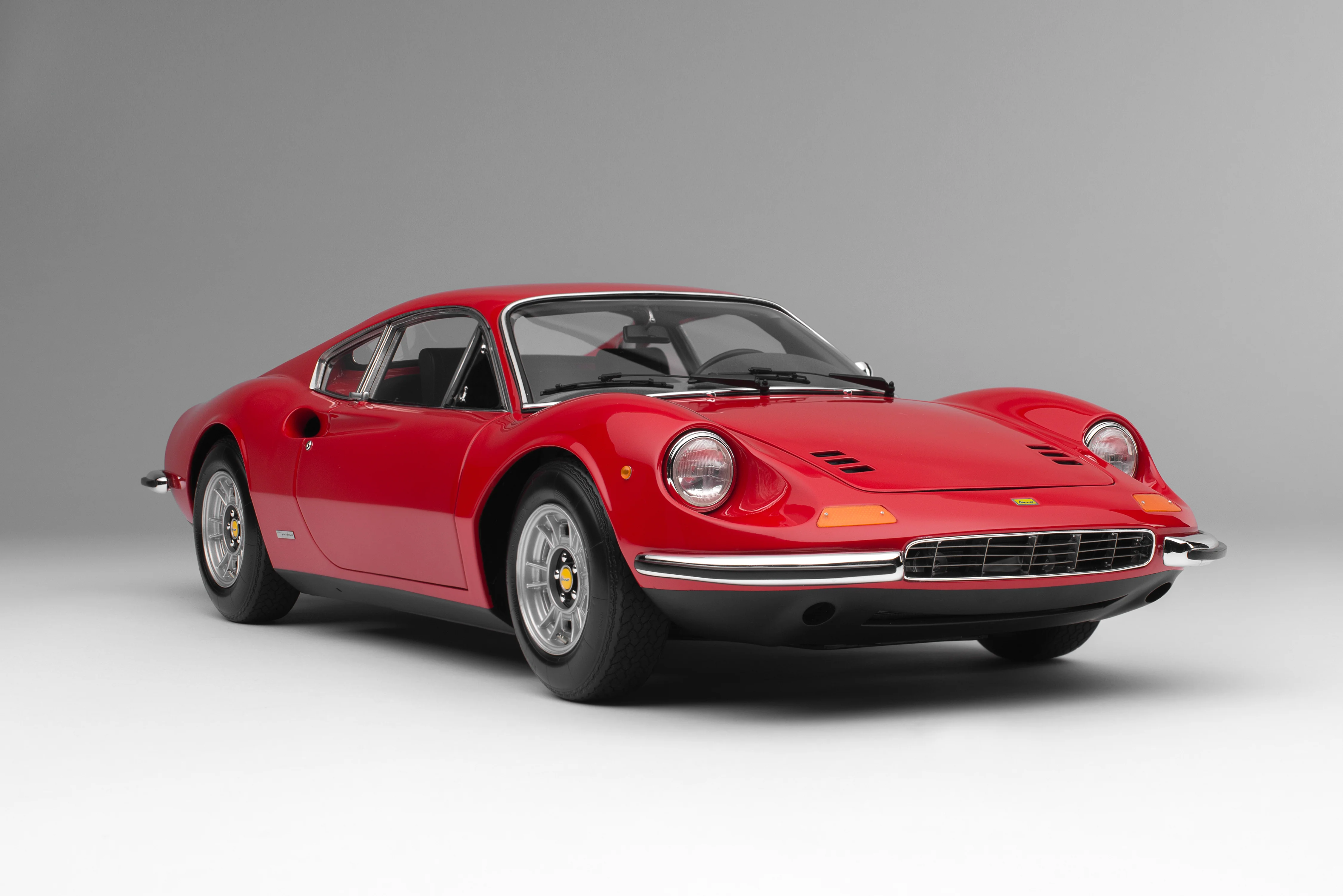
These fine 1:8 scale models have been handcrafted utilising our own CAD data created by scanning an original car in every detail. The resulting prototype has undergone strict scrutiny by Ferrari to ensure complete accuracy. The European specification model edition is as unveiled by Ferrari at the Geneva Motor Show in March 1972, whilst the US specification edition incorporates all the additional elements of the cars sold specifically in the United States. Bespoke models can be commissioned for owners of the real car.
Product Information
Product Information
Shipping & Returns
Shipping & Returns
Description
Considered to be one of the most beautiful road-going Ferraris ever created, the Dino 246 GT was the more powerful successor to the 206 GT. It was a delight from all angles and its combination of beauty, handling, V6 engine note, mid-engined layout, unusually good all-round visibility and comparative affordability made it irresistible. Enzo envisaged the Dino to be a rival to Porsche’s new 911 and it was a real statement from the Italian marque in terms of concept and design, after only building front-engined V12 sports cars previously.
The original Dino 206 GT was introduced in 1967 with a two litre V6 engine, before being replaced in 1969 with a more powerful version bearing a 2.4 litre V6 in the Dino 246. With 195 hp, the 246 was sprightly and its rear mid-engine configuration provided it with light steering and terrific balance. Visually the 246 GT was almost identical to the 206 GT that it succeeded, though the engine block material was changed from aluminium to cast iron and the wheelbase was extended by 60mm. By 1972, with the sales of the Dino 246 GT stable, Ferrari looked to increase its popularity still further by introducing an open version. The styling retained the individual, attractive lines of the 264 GT, with the added advantage of a practical targa top for open-air driving.
The voluptuous bodywork of the Dino was designed by Pininfarina and built by Scaglietti and covered a tubular chassis which carried wishbone independent suspension at each corner. The engine, with four overhead camshafts, was mounted transversely behind the driver and in front of the rear axle. Power to the wheels was transmitted via drop gears to the transverse 5-speed gearbox, in unit with the differential and engine sump. With rack and pinion steering and a mid-engined configuration, it was a revelation in terms of road holding and stability, nothing had been made like this before and it left its larger V12-engined siblings in its wake.
The Dino has the distinction of being one of the few Ferraris not to carry a Prancing Horse badge: the sub-brand was created to offer relatively low-cost sports car with engines smaller than 12 cylinders. It was named in honour of Enzo’s late son Alfredo ‘Dino’ Ferrari, who was credited with design for the original V6 engine used in the Formula 2 cars. Alfredino’s signature forms the basis of the Dino badge. More than 3,700 were produced in both GT berlinetta and GTS spider configurations, a testament to its widespread appeal.
These fine 1:8 scale models have been handcrafted utilising our own CAD data created by scanning an original car in every detail. The resulting prototype has undergone strict scrutiny by Ferrari to ensure complete accuracy. The European specification model edition is as unveiled by Ferrari at the Geneva Motor Show in March 1972, whilst the US specification edition incorporates all the additional elements of the cars sold specifically in the United States. Bespoke models can be commissioned for owners of the real car.